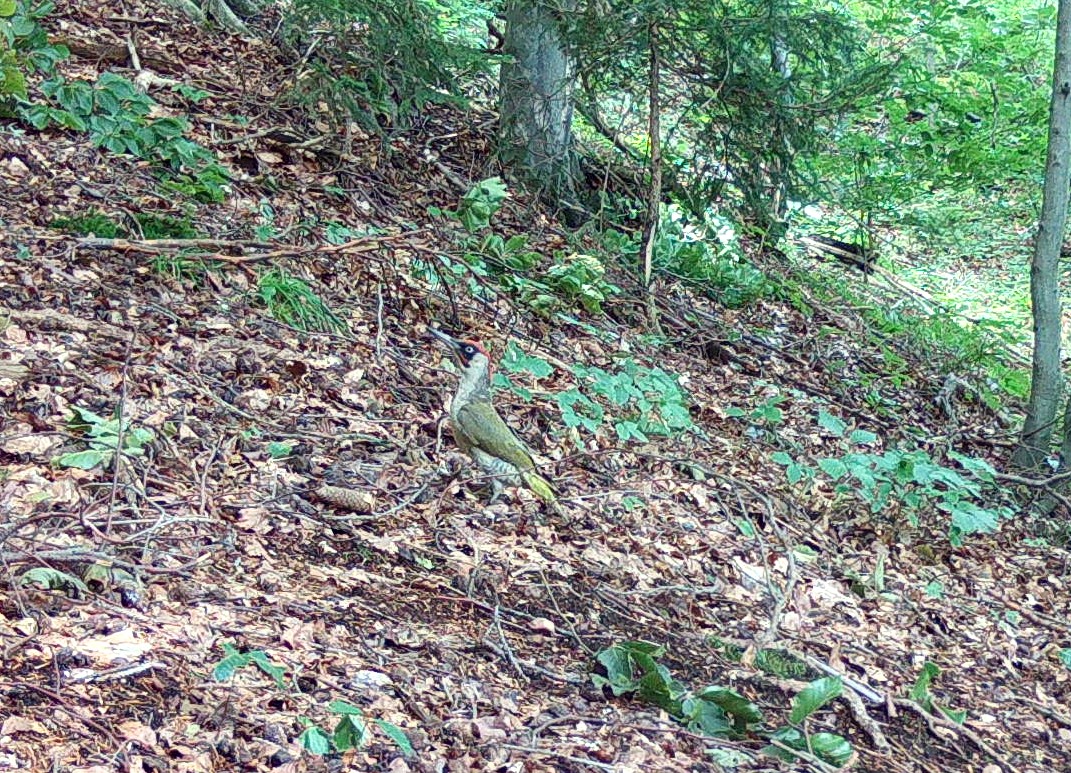
The camera eye captures three species of woodpecker
In the Oljka hunting area, Šmartno ob Paki, we took photographs of three species of woodpeckers as part of the EOW, StepChange and CRP projects. This family is characterised by a strong beak, which they use to find food in cracked wood, to make a burrow, to communicate by drumming on the log, and also to mark their territory.
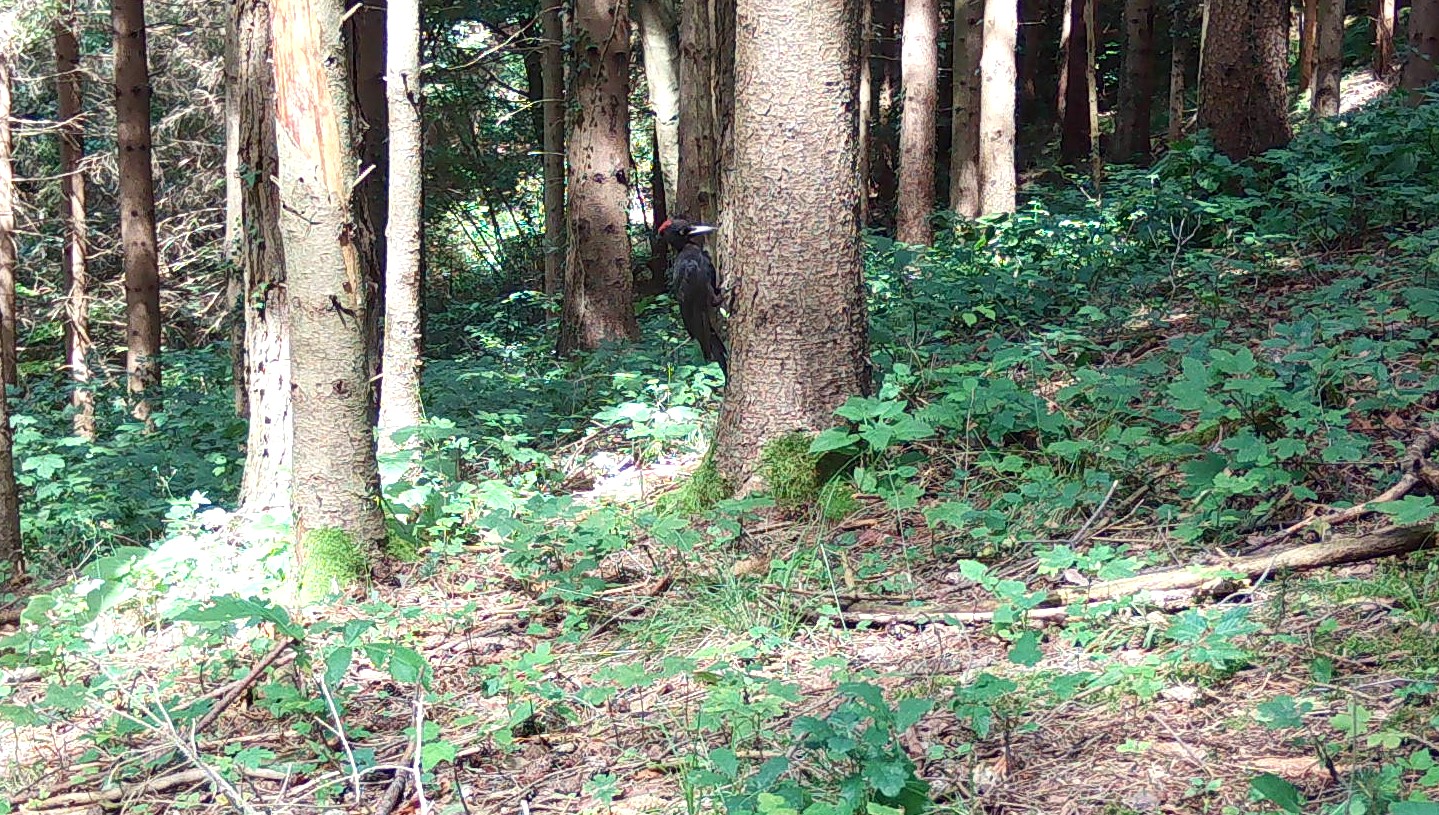
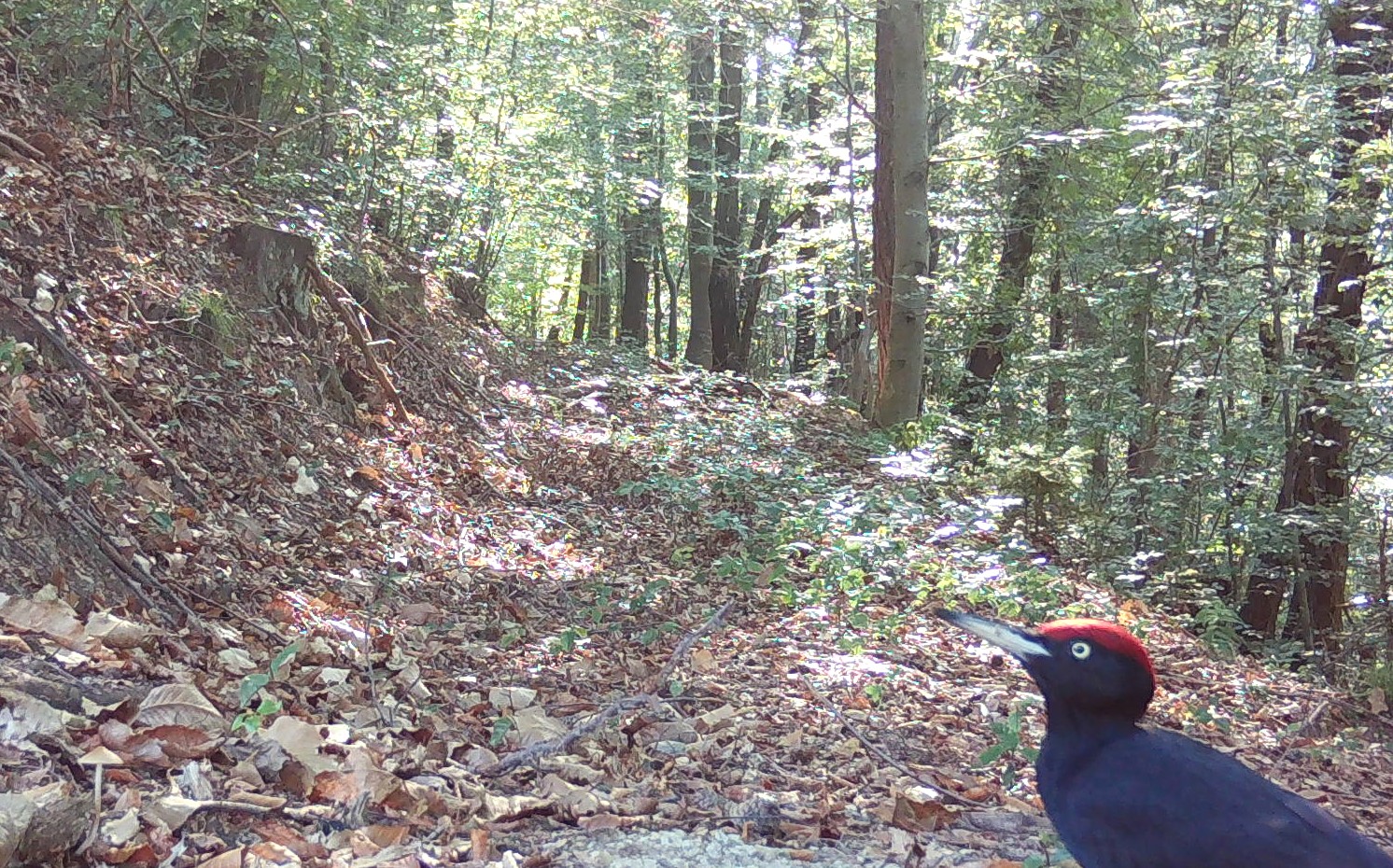
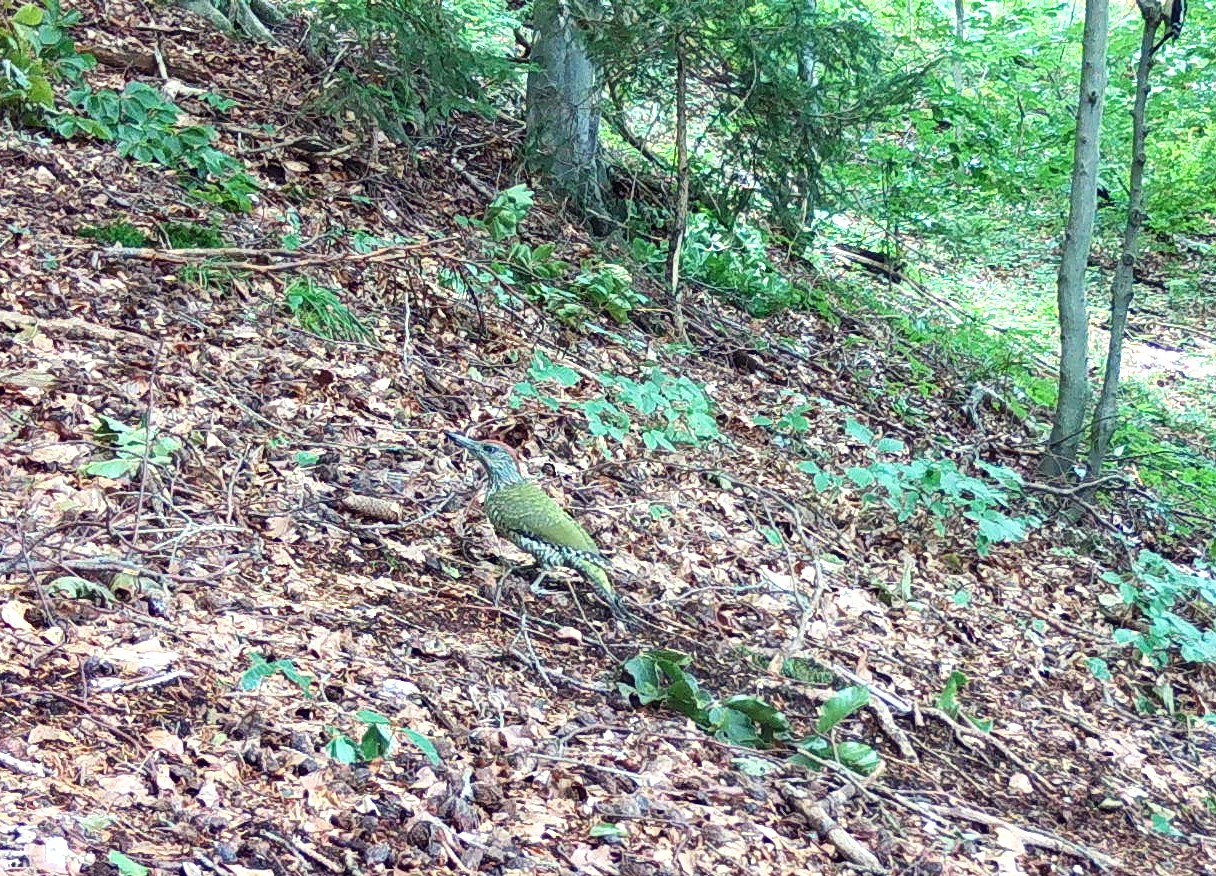
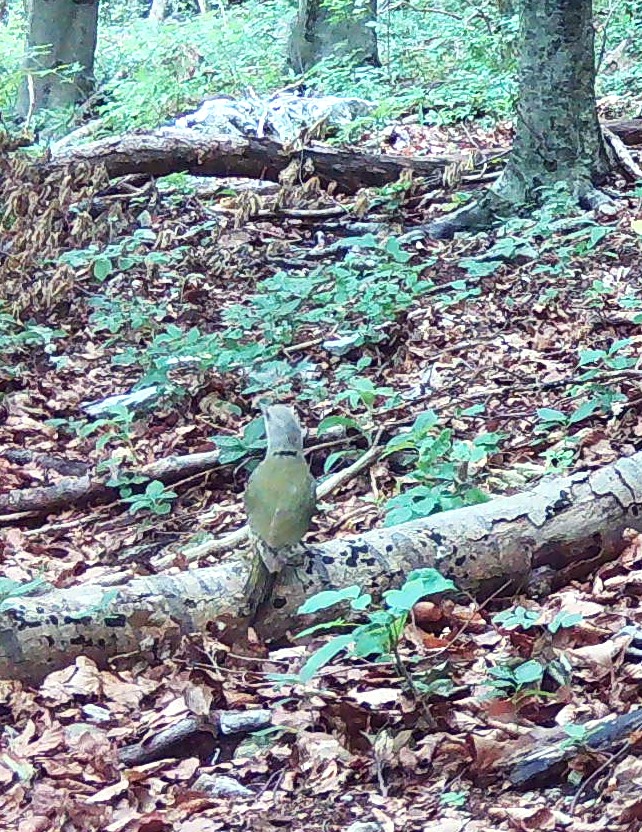
The largest of these is the black woodpecker (Dryocopus martius), which, as its name suggests, is black with a red head. More similar are the green woodpecker (Picus viridis) and the grey-headed woodpecker (Picus canus), which are most easily distinguished by their size and colouring – the green woodpecker is larger and has black-coloured feathers that extend from the bill to the middle of the head. Our cameras also captured a juvenile green woodpecker, which can be identified by its spotted feathers and the absence of a black face mask.
Oko kamere na Gori Oljki ujelo tri vrste žoln
V lovišču Oljka (Šmartno ob Paki) smo v okviru projektov EOW, StepChange in CRP posneli fotografije treh vrst žoln. Za predstavnike iz te družine je značilen močan kljun, s katerim iščejo hrano v trhlem lesu, si izdelajo duplo, z bobnanjem po deblu pa se sporazumevajo ter tudi označujejo svoj teritorij.
Največja med njimi je črna žolna (Dryocopus martius), ki je, kot pove že njeno ime, črne barve z rdeče obarvano glavo. Bolj podobni sta si zelena žolna (Picus viridis) in pivka (Picus canus). Med seboj ju najlažje ločimo po velikosti in obarvanosti – zelena žolna je večja ter ima črno obarvano perje, ki sega od kljuna do sredine glave. Naše kamere so posnele tudi mlad osebek zelene žolne, ki ga lahko prepoznamo po pegastem perju in odsotnosti črne obrazne maske.