FEP Presents the Soil Colours Workshop at the Skills Fair 2026
On Friday, 29 May 2026, the Faculty of Environmental Protection participated in the traditional Skills Fair. The event was organised by the Regional Study Centre in Celje as part of Lifelong Learning Weeks 2026.
This year’s Skills Fair once again brought together different generations, institutions, and fields of knowledge. It offered visitors an opportunity to learn about various activities, learning opportunities, and practical skills. The event was designed as an open, creative, and encouraging space for lifelong learning, combining creative, research, technological, physical, and other educational activities.
The Faculty of Environmental Protection presented itself at the fair with the creative and research-based workshop Soil Colours, which introduced visitors to the importance of soil as one of the key, yet often overlooked, natural resources. Through a practical activity, participants learned that soil is not merely the surface we walk on, but an important part of the environment. It enables food production, contributes to water storage and purification, provides a habitat for numerous organisms, and plays an important role in biodiversity and environmental quality.
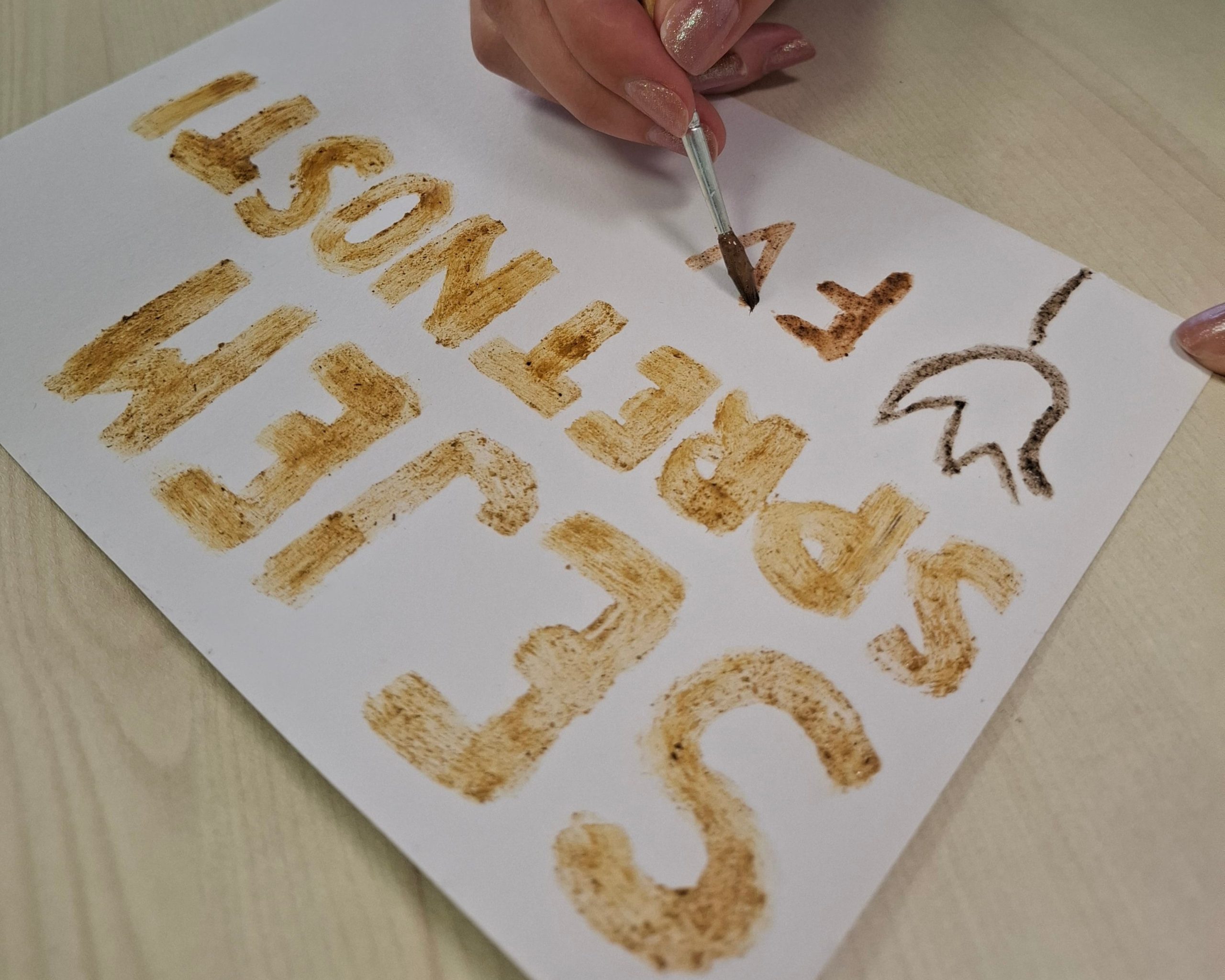
During the workshop, visitors used soil samples of different colour shades to make natural crayons for artistic expression. The activity connected environmental knowledge, research, creativity, and practical experience in an engaging and accessible way. By working with soil samples, participants were able to observe the colour diversity of soils and reflect on their role in nature and everyday life.
The workshop content was also linked to the study content of the Faculty of Environmental Protection, particularly the courses Soil and Environment and Environmental Geochemistry. The faculty is also developing this topic within the CURIOSOIL project, which aims to foster curiosity, understanding, and knowledge about soils.
By participating in the Skills Fair, the Faculty of Environmental Protection contributed to the promotion of environmental knowledge, practical learning, and lifelong education. It also showed visitors that even more complex environmental topics can be presented in a creative, experiential, and understandable way.


