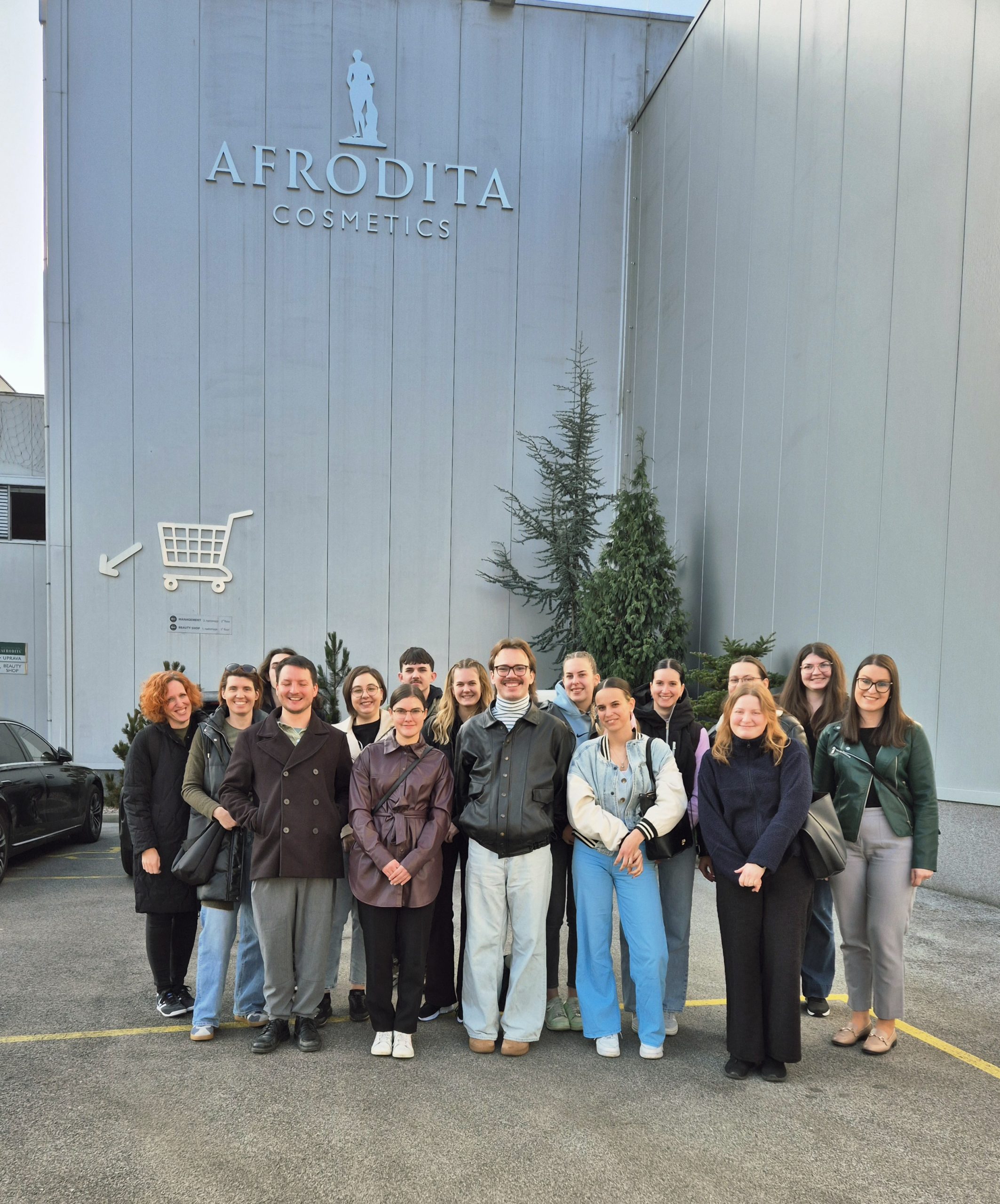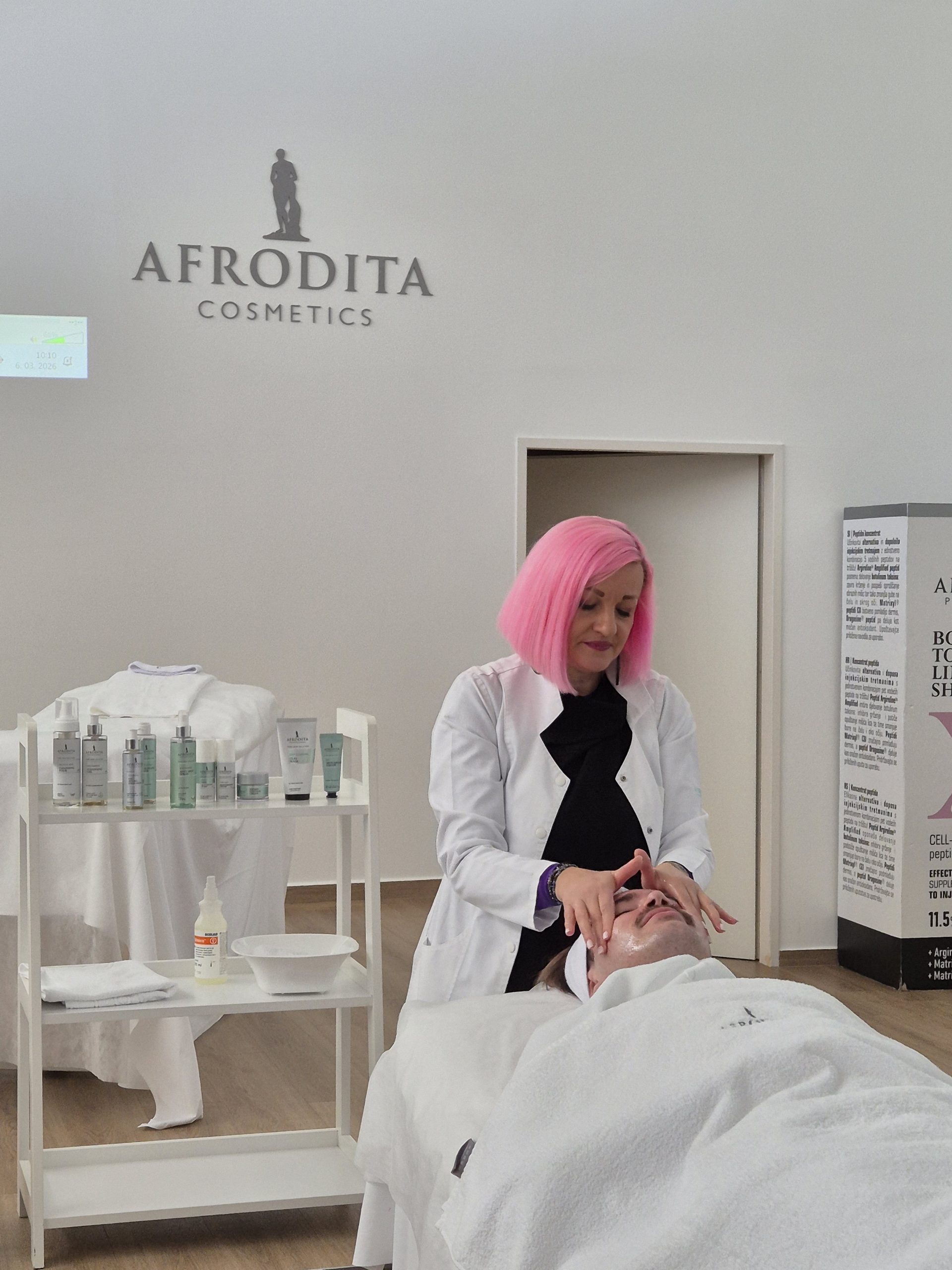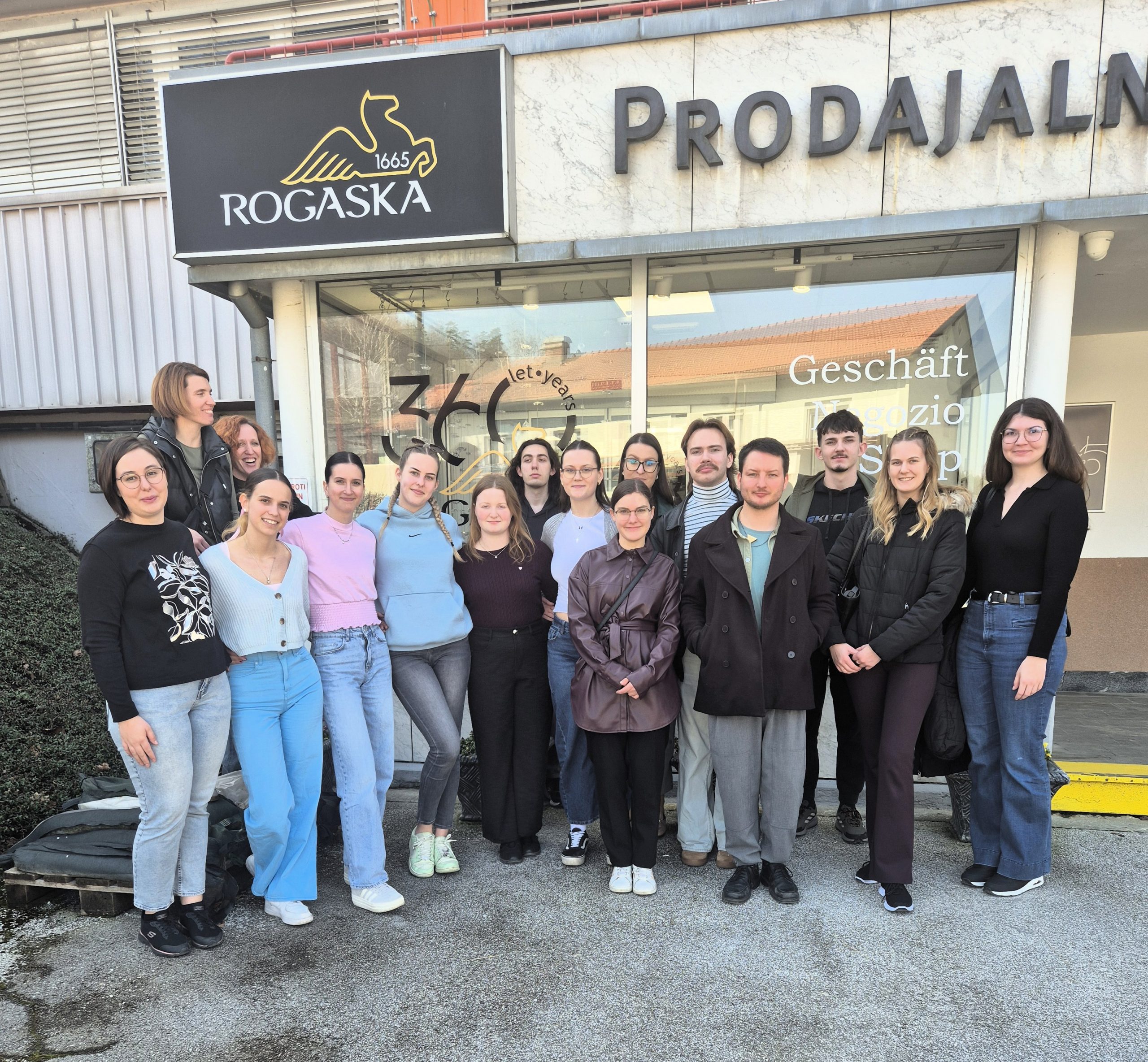
As part of the Erasmus+ GreenGate2 project, the Faculty of Environmental Protection organised a professional field trip for students to Afrodita Cosmetics and Crystal Ambience Rogaška. The visit was designed to provide first-hand insight into contemporary production processes, approaches to reducing environmental impacts, and examples of good practice in sustainable development and responsible resource management.
Afrodita Cosmetics: compliance-based production and responsible use of ingredients
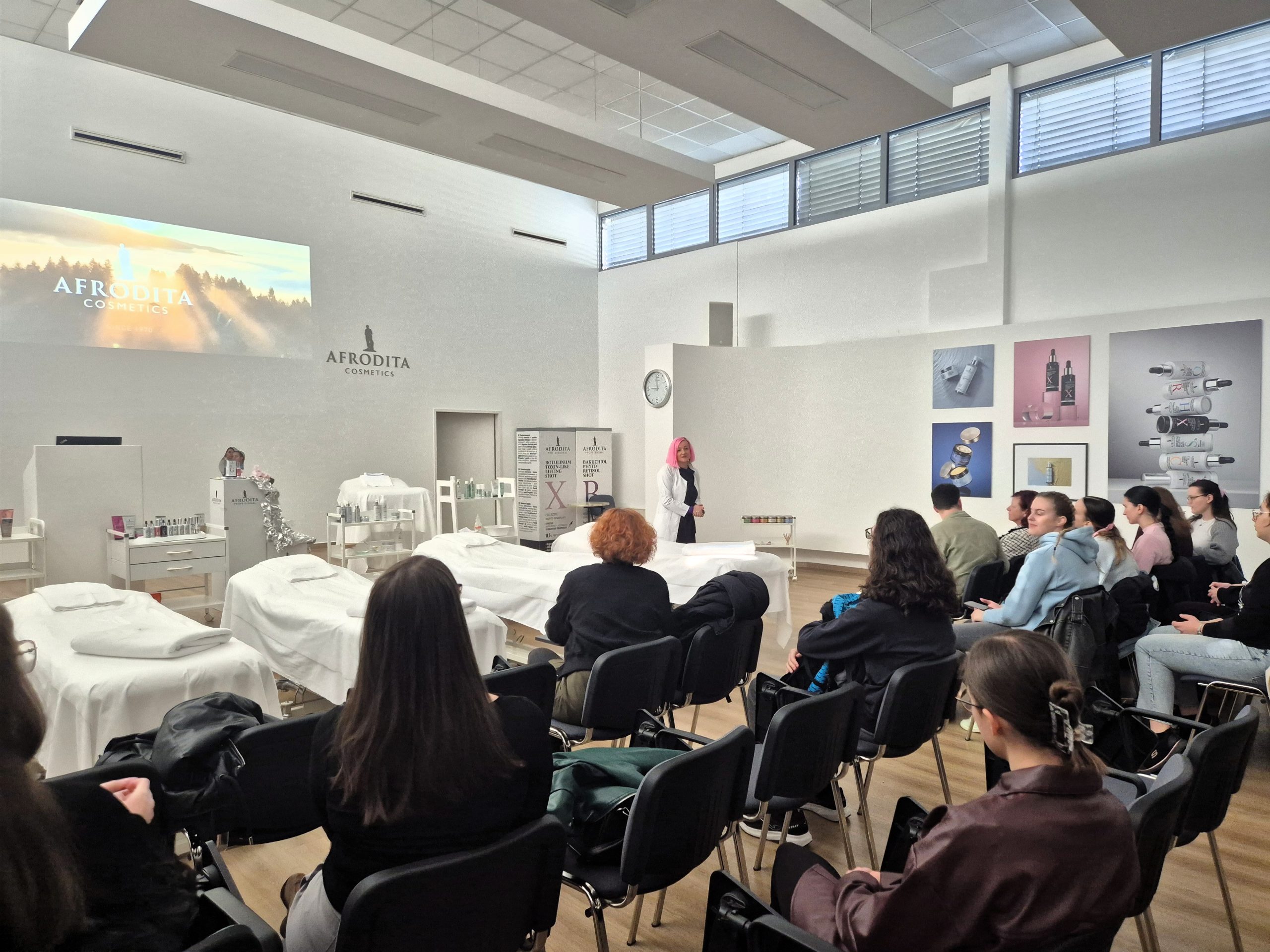
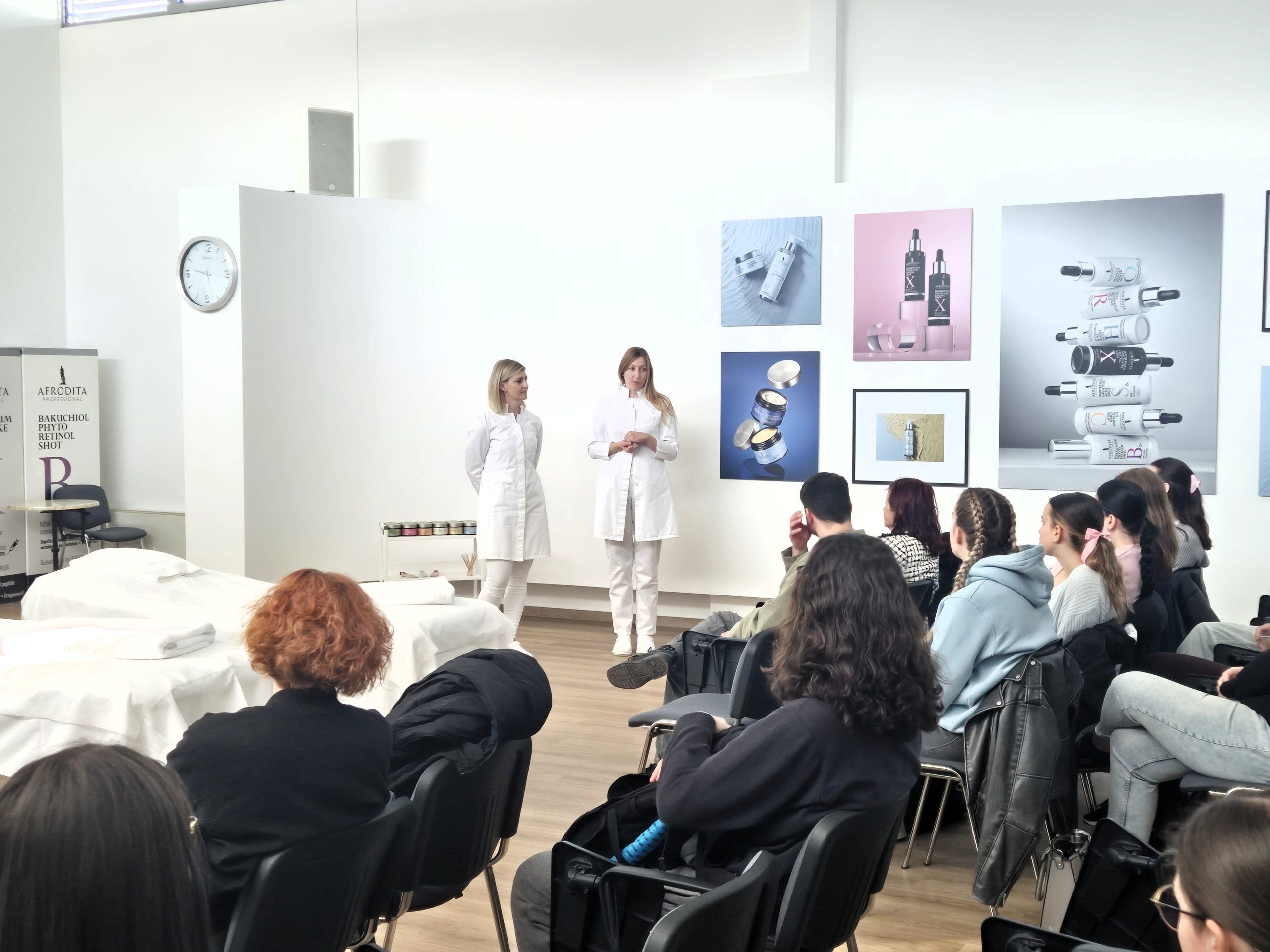
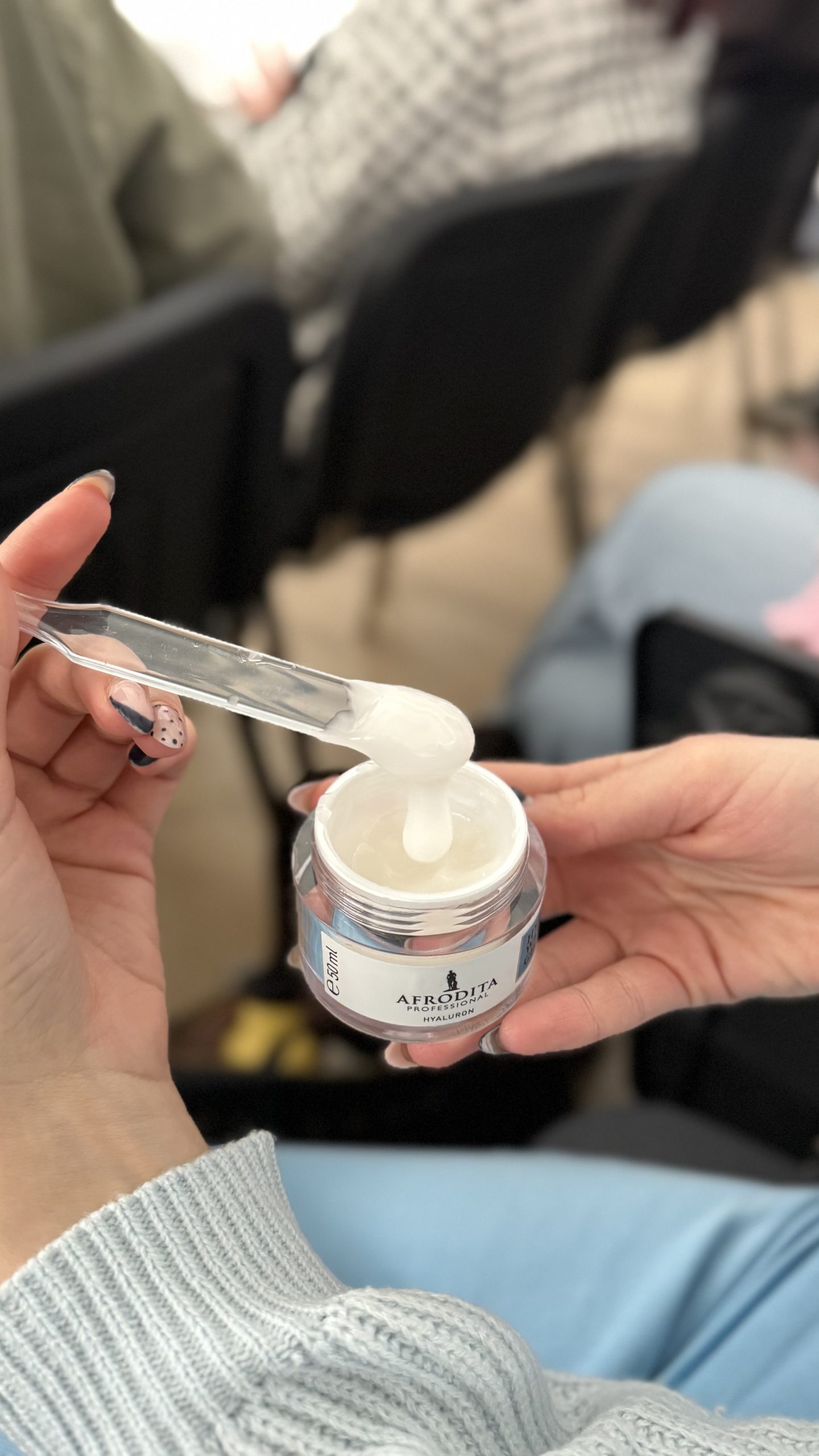
The first part of the visit took place at Afrodita Cosmetics, a leading Slovenian cosmetics company based in Rogaška Slatina. Students were introduced to the company’s development and organisational set-up, as well as to the process of creating high-quality cosmetic products. A particular focus was placed on integrating more sustainable processes across the supply chain, manufacturing, and sales.
The professional component of the visit centred on environmental management in the cosmetics industry, especially adherence to regulatory frameworks and internal standards that guide the selection of ingredients and technological procedures. Using practical examples, students also addressed issues that are essential for reducing unnecessary environmental burdens throughout a product’s life cycle, from raw materials to the final product.
Rogaška Glassworks: observing the full process and the environmental dimension of industrial transformation
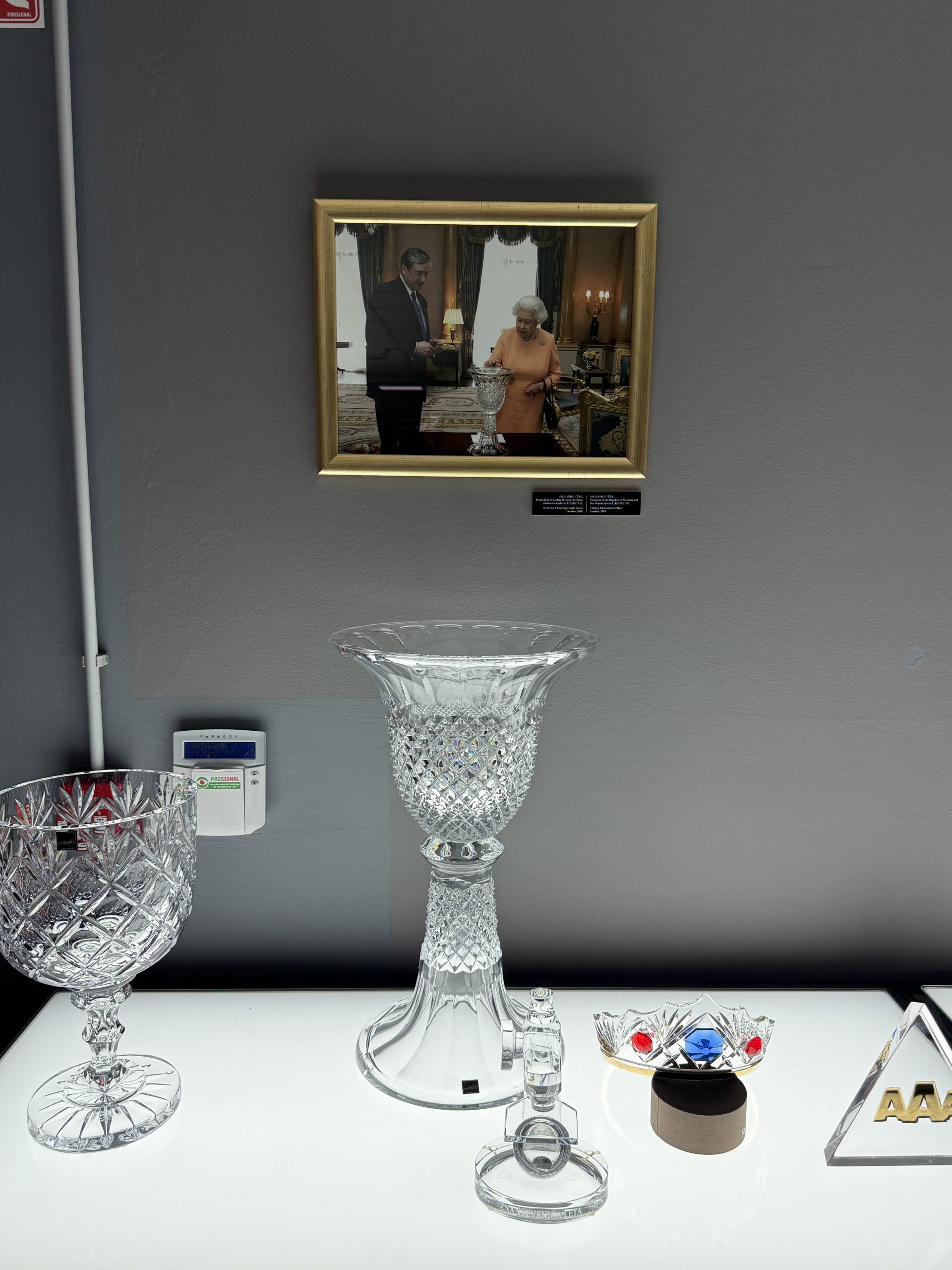
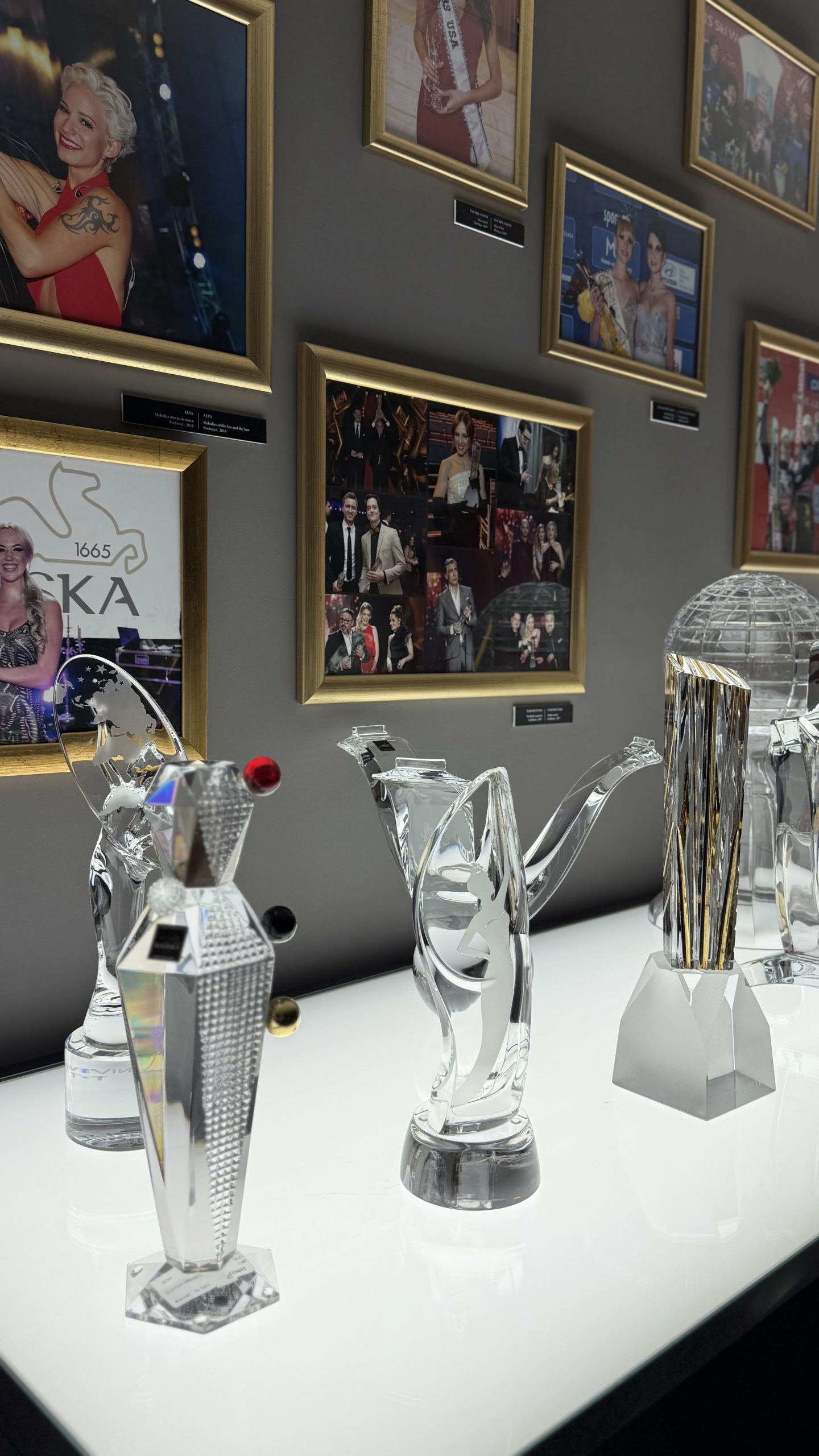
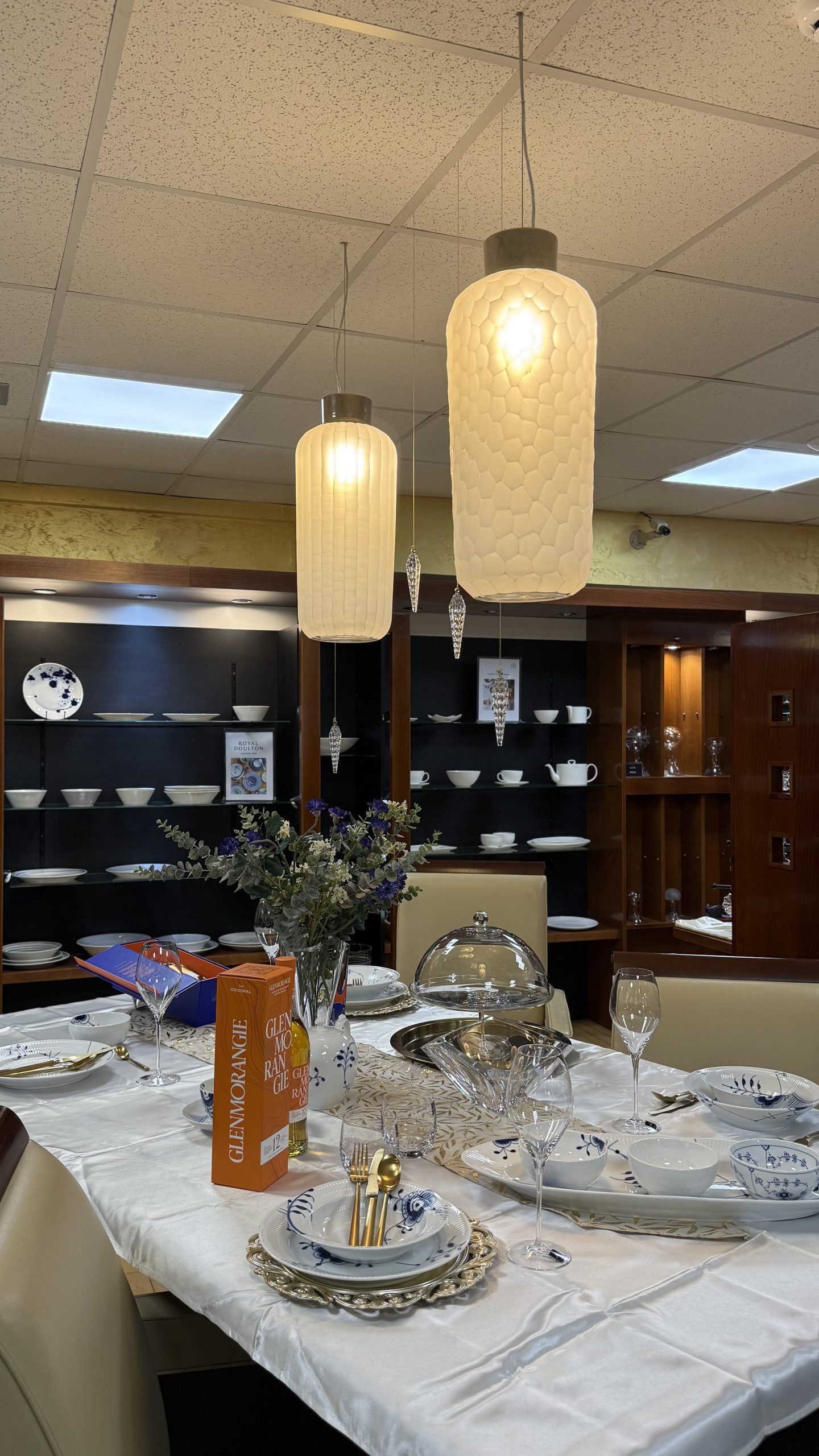
The second part of the field trip continued at Rogaška Glassworks, where students, accompanied by a guide, observed the entire production process and explored the technological and organisational aspects of manufacturing premium crystal products. The visit also included the Hall of Fame exhibition of protocol gifts and trophies and concluded at the Pegasus Rogaška store.
During the presentation, attention was drawn to the importance of combining the long tradition of glassmaking with the demands of modern industry. Students paid particular attention to the environmental dimensions of production, including more efficient resource use, the reduction of environmental impacts, and orientations linked to circular economy principles, which are increasingly important in planning development and modernising production systems.
Relevance for study and competence development
The field trip enabled students to compare environmental challenges and solutions across two different manufacturing sectors and to gain a deeper understanding of how sustainability principles are implemented through regulatory compliance, internal standards, careful selection of inputs, and process optimisation. Such experiential learning complements theoretical coursework and strengthens students’ competencies for critical assessment of environmental aspects in real-world professional settings.