µPlastiTrap I Portable microplastic sampler
Developed by FVO as part of the Interreg Europe PLASTIX project · March 2023 – June 2027
µPlastiTrap I is a portable microplastic sampler for small, shallow rivers developed by FVO. It was designed in response to the 2023 floods in the Savinja–Šalek region. In March 2026, the faculty received a special commendation at Slovenia’s national ED.VITA awards for the sampler.
Project at a glance
| Coordinator | Faculty of Environmental Protection (FVO) |
|---|---|
| Partner | College of Industrial Engineering (VŠPI) |
| Developed under | the Interreg Europe PLASTIX project |
| Duration | March 2023 – June 2027 |
| Project initiator and researcher | Anja Bubik, PhD, Assistant Professor |
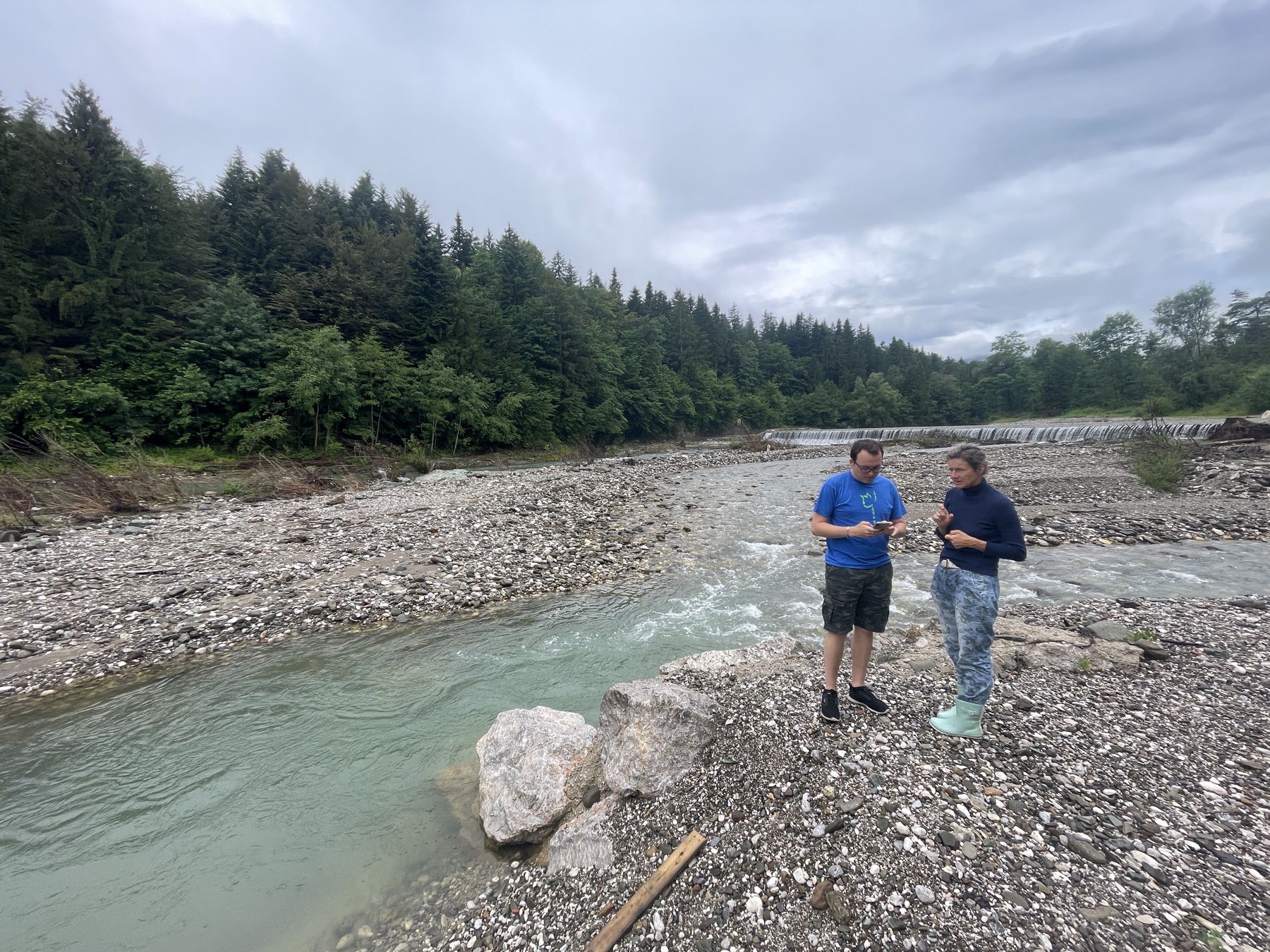
| Study area | Paka and Savinja rivers, Savinja–Šalek (SAŠA) region |
| Recognition | 2026 ED.VITA special commendation, Research and Innovation category |
Challenge and solution
A sampler designed for small rivers
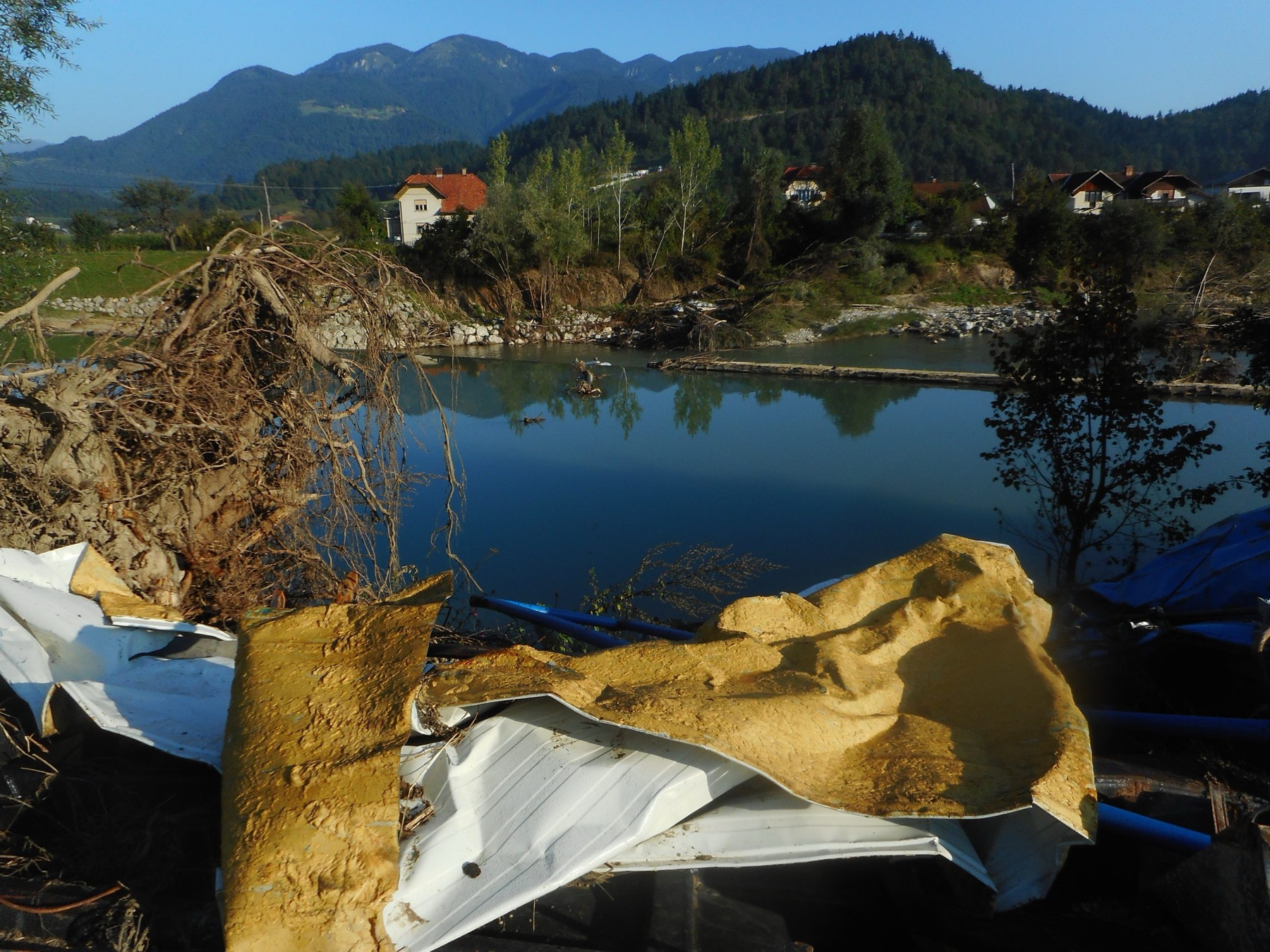
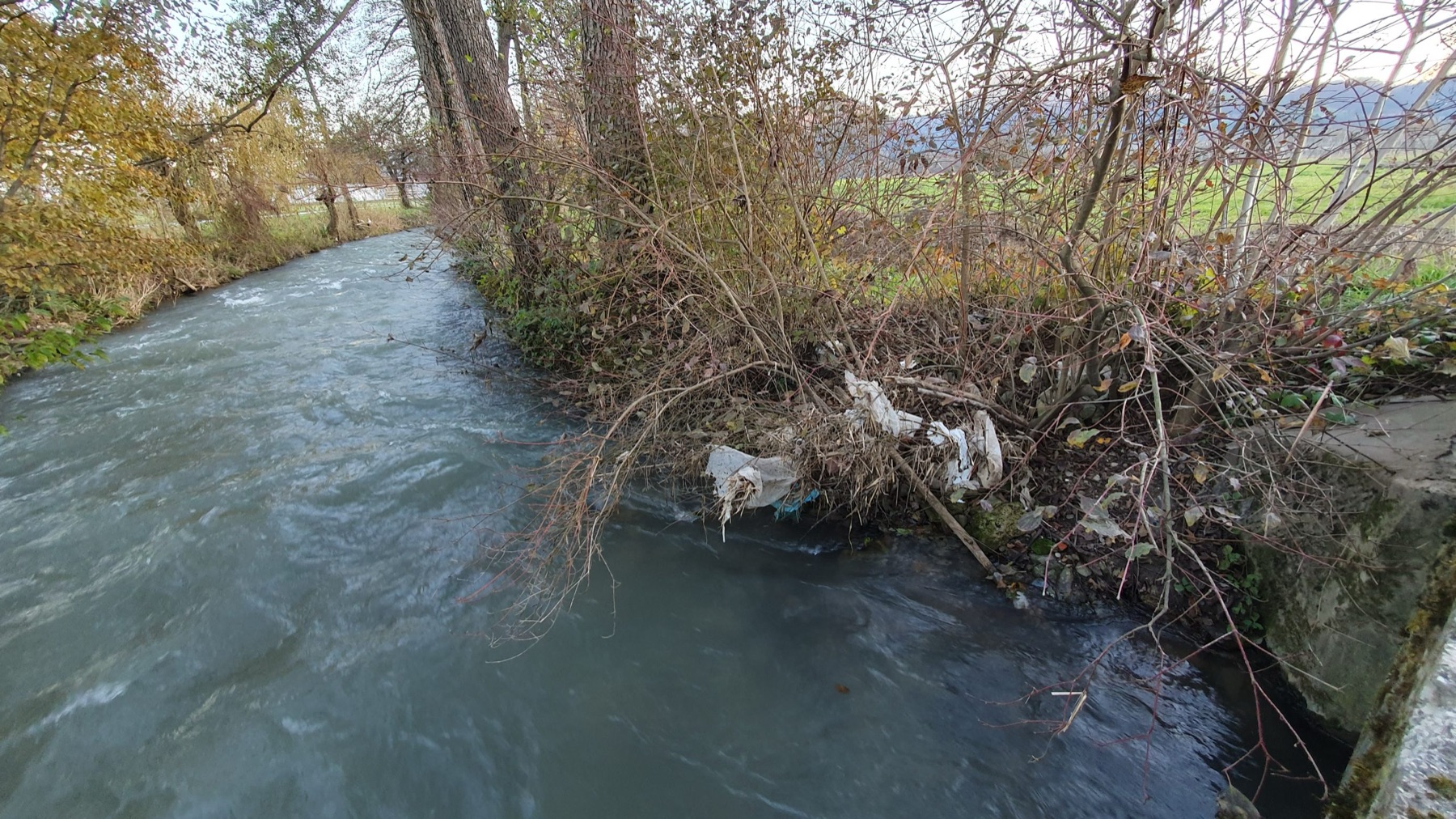
The 2023 floods left large amounts of plastic on the banks of the Paka and Savinja rivers. The plastic gradually breaks down and washes back into the water when it rains. Microplastics bind to pollutants and travel down rivers to the sea, but the region has not previously collected systematic data on them.
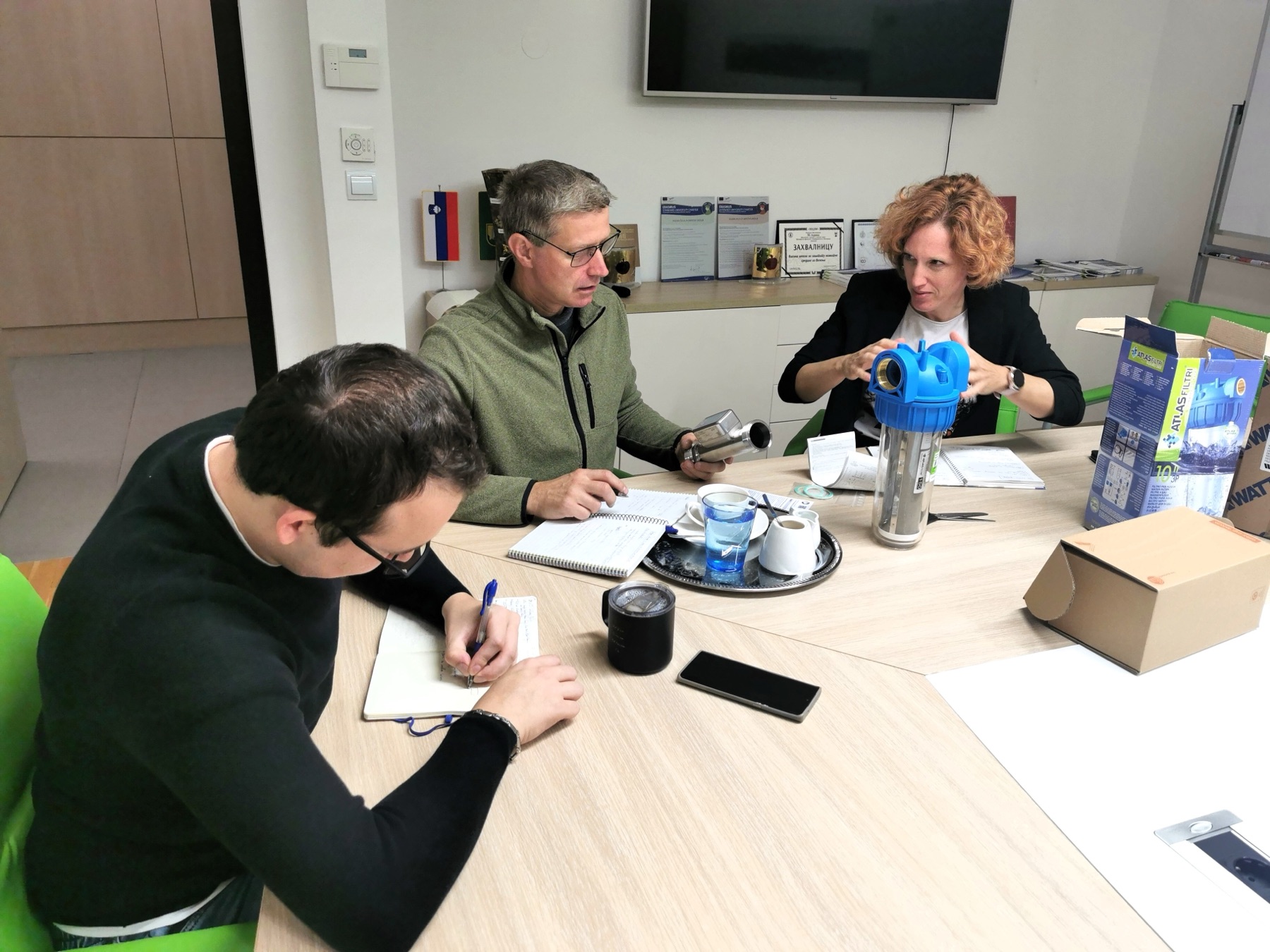
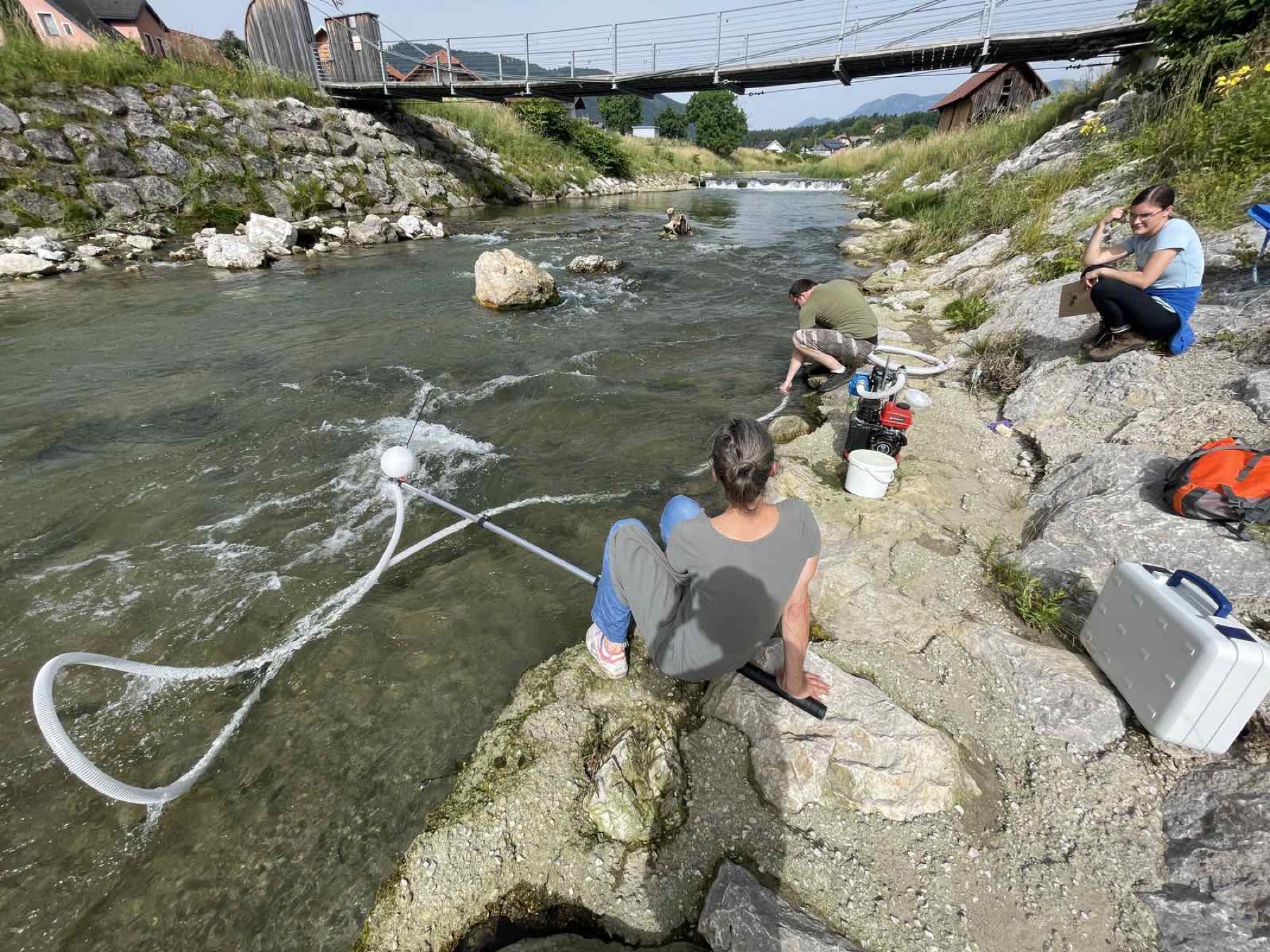
Conventional sampling requires boats, bridges or deep channels, which are unavailable along most stretches of the Paka and Savinja. µPlastiTrap I draws water directly from the bank and filters several thousand liters on site. It is portable, robust, affordable and simple enough for students and municipal staff to use.

How does sampling work?
PumpingČrpanje
A high-capacity portable pump draws water directly from the riverbank. The filtered water returns to the river through the outlet hose.
Pressure filtration
Pressurized water passes through a metal filter with 150 µm openings, which traps larger particles.
Flow measurement
An ultrasonic flow meter accurately measures the volume of filtered water, which is essential for calculating microplastic concentrations.
Concentrate
Several thousand liters of water yield around two liters of concentrated sample for laboratory analysis.
Laboratory analysis
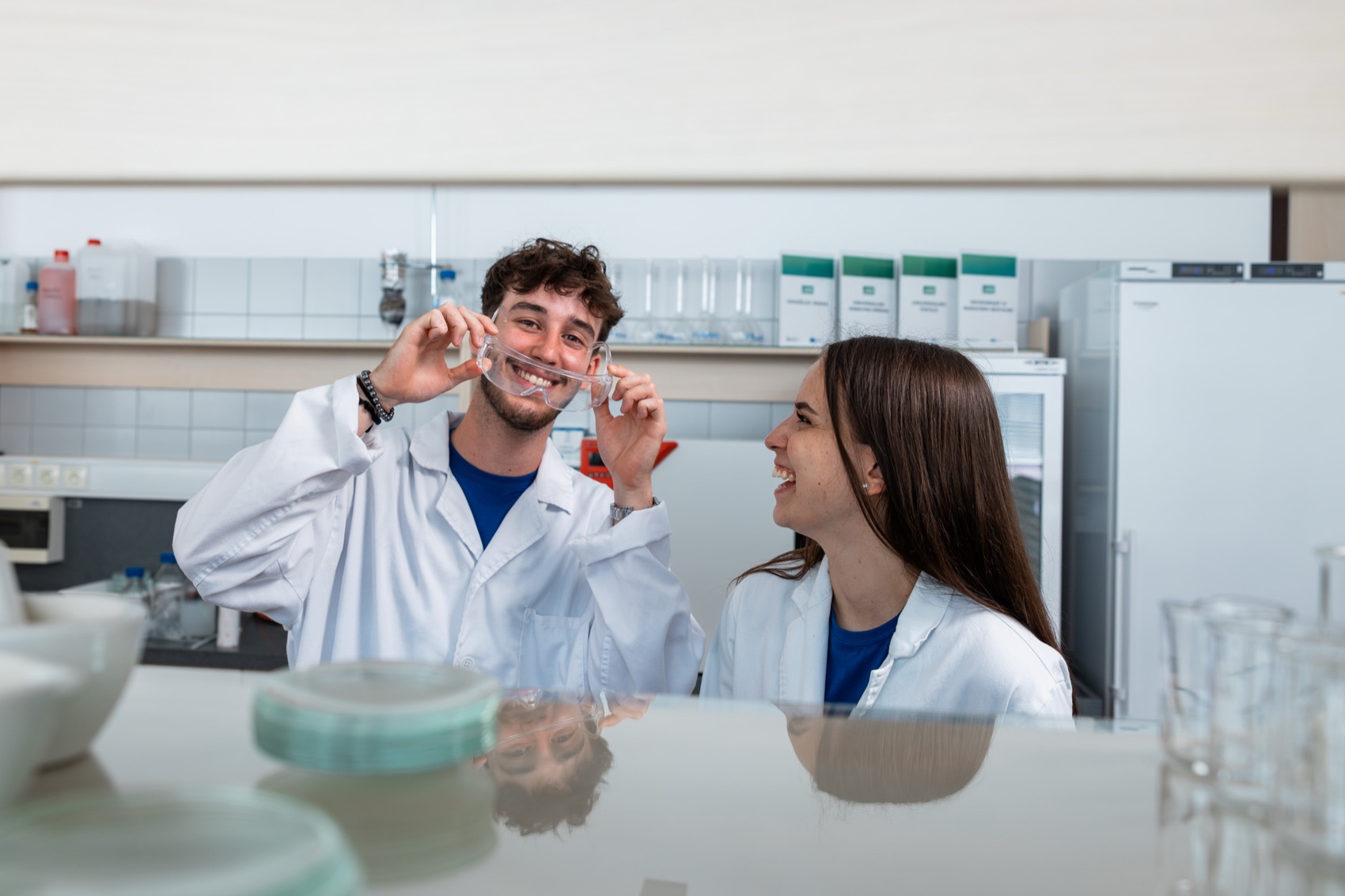
We sieve the sample, break down organic matter and examine the particles under a stereomicroscope. We use FTIR spectroscopy to identify the polymers and report the result as particles per cubic meter of water.
Eight sampling sites
| Code | Location | Why this site? |
|---|---|---|
| Paka | ||
| P1 | Paka near Velenje | upstream of a major urban area, beside the Slovenj Gradec–Velenje main road |
| P2 | confluence of the Paka and Bečovnica | downstream of Velenje and upstream of the Šalek Valley Central Wastewater Treatment Plant, near an industrial zone and farmland |
| P3 | Penk – Mešič | uninhabited area downstream of the Šalek Valley Central Wastewater Treatment Plant |
| P4 | Rečica ob Paki | just upstream of the confluence with the Savinja, where the Paka channel has been widened and deepened |
| Savinja | ||
| S1 | Luče, upstream of the wastewater treatment plant | near the source and upstream of larger settlements, where human impact is still limited |
| S2 | Melišče pri Grušovljah | downstream of the Luče wastewater treatment plant, beside farmland; the floods substantially widened the channel |
| S3 | Nazarje, confluence with the Dreta | deepened and widened channel beside a footpath and the main road |
| S4 | Soteska | downstream of all settlements in the region, near meadows, woodland and the main road |
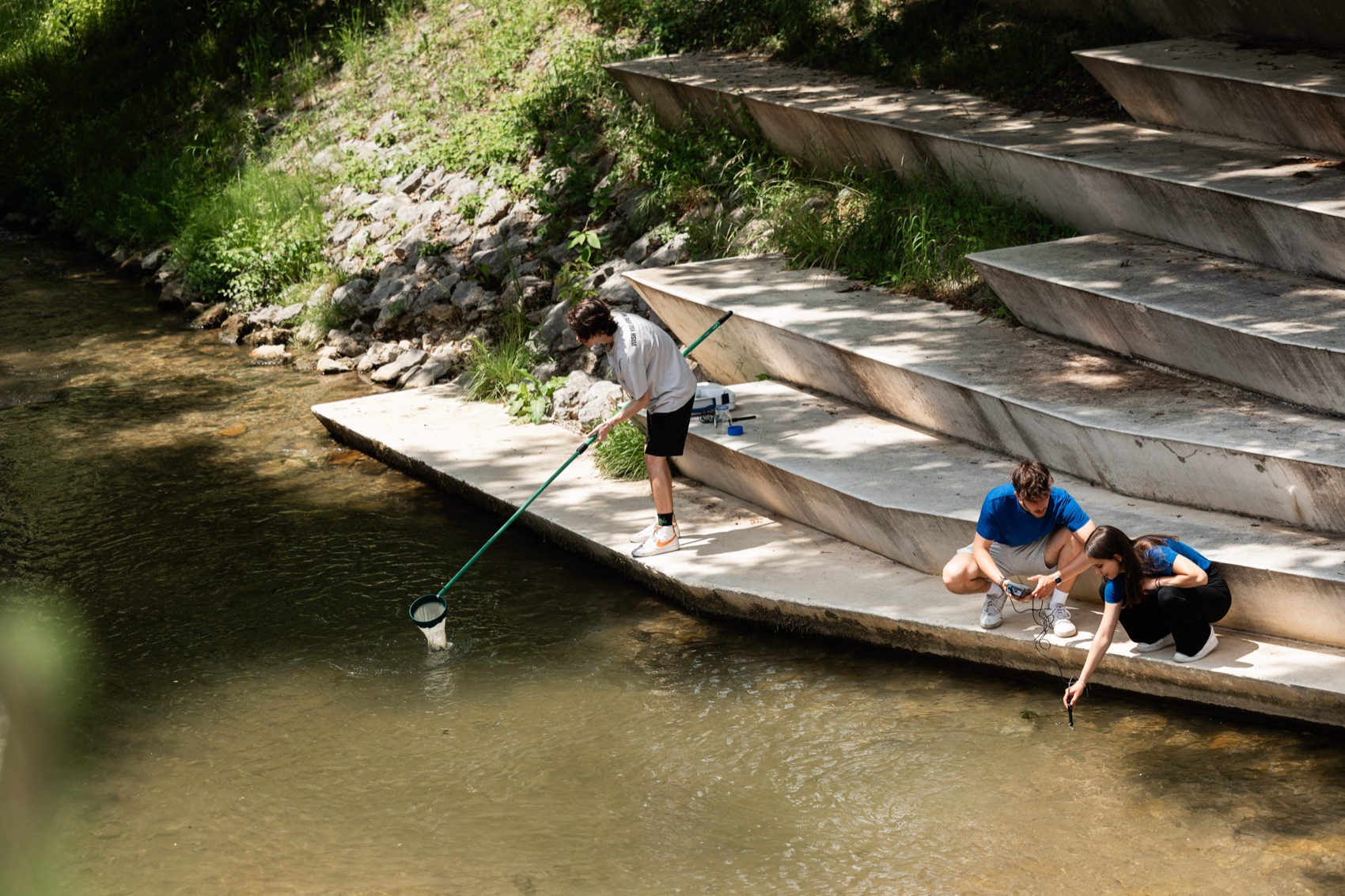
Sampling takes place seasonally. Source: Nika Kotnik’s undergraduate thesis (FVO, 2025).
Results and collaboration
Initial results (particles/m³): the Paka recorded 11 in fall 2024 and 7 in winter 2025; the Savinja recorded 4 in fall 2024 and 1 in winter 2025. The counts are low but concerning because both rivers are considered clean. The method can be used in other watercourses. Contact Assistant Professor Anja Bubik if you are interested in collaborating or writing a thesis on microplastics.
FVO student theses
FVO contact
Last updated: October 2026
Share this page
Study at FVO
Study that sparks change
If you’re interested in the environment, nature, technology and the challenges ahead, FVO is your next step.
Explore study options, practical training and career paths in environmental protection.