A student wearing safety goggles compares two sample tubes

Programme overview

Environmental Protection and Ecotechnology is a two-year, second-cycle master’s programme, updated for 2026/27. It is for graduates from different fields who want to deepen their environmental knowledge and take on more demanding professional, research and development work. You can study full-time or part-time, including alongside a job.

At a glance

Key facts about the programme

Key facts about the Environmental Protection and Ecotechnology master’s programme
Type and cycleSecond-cycle master’s programme
Degree titleMaster of Ecotechnology
Duration2 years, 120 ECTS credits
Mode of studyFull-time and part-time. The part-time timetable and delivery are designed for working students. Courses run in sequence, and materials are available on Moodle.
Tuition feesPart-time students pay tuition. See the price list.
Language and locationSlovenian. Trg mladosti 7, Velenje.
Places (2026/27 call)10 full-time and 35 part-time places, plus 15 part-time places for citizens of Western Balkan countries
ApplicationOnline through the eVŠ portal

Programme structure

Two years, from foundations to the master’s thesis

Each year carries 60 ECTS credits. You build on the shared foundations, specialise through two modules and elective courses, and complete the programme with a master’s thesis.

Year 1 – shared foundations and Module A

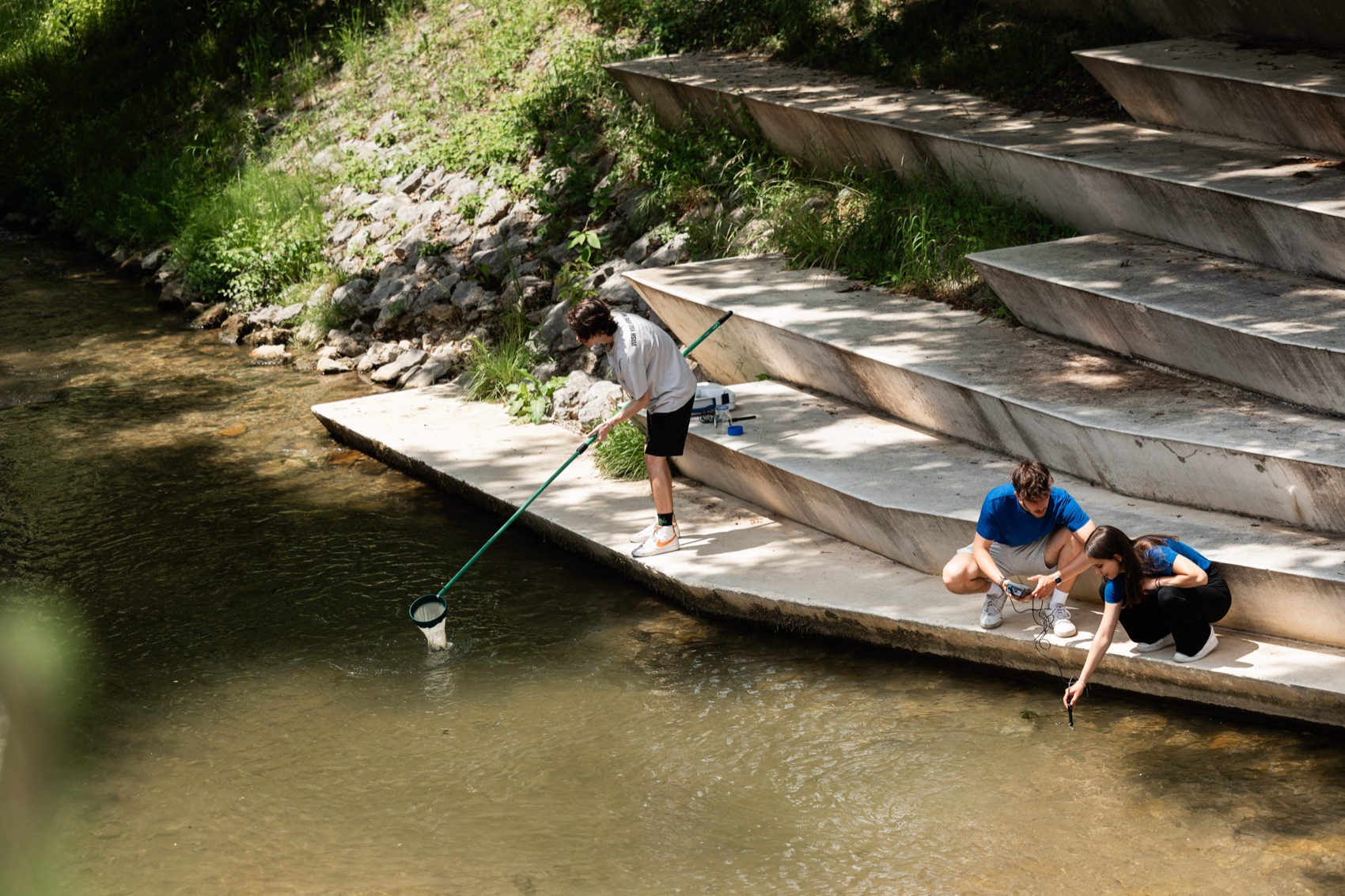
Seven compulsory courses (44 ECTS credits): Environmental Technologies, Nature Conservation and Protected Areas, Environmental Law, Environmental Economics, Project and Research Work, Computing Practicum, and Laboratory and Field Practicum. Add Module A (16 ECTS credits).

Year 2 – specialisation and master’s thesis

Modern Statistical Methods in the Natural Sciences (6 ECTS credits), Module B (16), two electives worth 4 credits each, and the master’s thesis (30).

Completion – defence and degree title

After completing all requirements and defending your thesis, you earn 120 ECTS credits and the title Master of Ecotechnology.

Modules

Three specialisations

Each module consists of four courses worth 4 ECTS credits each. You take Module A in year one and Module B in year two. In year two you also choose two of 14 electives, ranging from AI in environmental protection to marine conservation.

Entry requirements

Path to master’s studies

The programme welcomes graduates from different disciplines because environmental challenges call for different perspectives.

First-cycle degree

You can enrol with a completed first-cycle programme of at least 180 ECTS credits in education, social sciences, natural sciences, engineering, agriculture, forestry, fisheries and veterinary science, health and welfare, or environmental protection.

Coming from another field or transferring? Submit a request

If you come from another field or from abroad, submit a request to the Academic Affairs Committee. It may require you to complete up to 60 additional ECTS credits before enrolment. For transfers into year two from another programme, the committee decides based on your request and transcript.

Applying through the eVŠ portal

Submit your application and supporting documents online by the published deadline. FVO first-cycle graduates do not need to attach supporting documents. If there are more applicants than places, selection is based on the average grade for completed requirements, including the final thesis.

When is the next intake?

Enrolment for 2026/27 has closed. The 2027/28 call, including places and deadlines, is expected in spring 2027 on the Applications and enrolment page. Find presentation dates under Open days. For reference, see the 2026/27 call (PDF).

Have a question about the programme?

Student Affairs Office

Milena Ževart

Office hours: Monday, Tuesday, Thursday and Friday 10:00–13:00

Wednesday 10:00–13:00 and 15:00–17:00

Last updated: October 2026

Study at FVO

Study that sparks change

If you’re interested in the environment, nature, technology and the challenges ahead, FVO is your next step.

Explore study options, practical training and career paths in environmental protection.